

Overview
Benefits Administration (HR-11) is where HR administrators define and maintain the organization’s benefit offerings. Open it from HR → Benefits → Plans (route/hr/benefits/plans). Each plan captures its type, provider, coverage levels,
premiums, deductibles, eligibility rules, and active status, so the same catalog
powers employee enrollment, eligibility checks, and compliance reporting downstream.
The plans dashboard
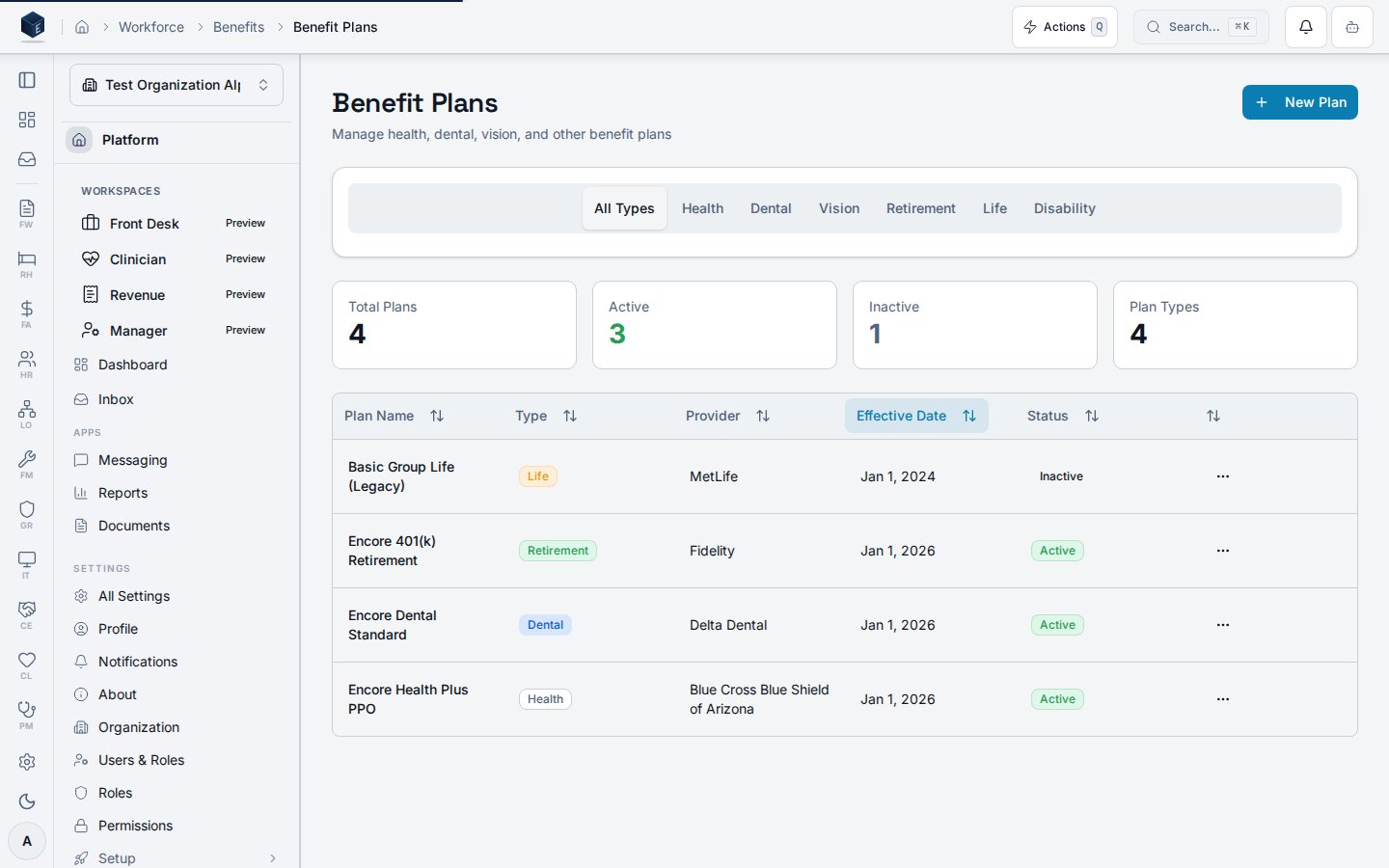
The plans list (/hr/benefits/plans) is the administration hub. Summary cards at
the top give an at-a-glance count of total, active, and inactive plans
plus the number of distinct plan types offered, and the table below lists every
plan with its name, type, provider, effective date, and status.
Plan types
A single organization typically offers several categories of benefit, each modeled as its own plan:
Deactivating a legacy plan (for example a retired group-life policy) keeps it out of
new enrollment while preserving its history — the dashboard’s Inactive card and
the row’s status badge make the distinction clear.
Why a single dashboard
- One source of truth — every plan the organization offers lives in one list, so HR can see the full benefit landscape at a glance.
- Type at a glance — summary cards and type badges surface the mix of offerings (how many health vs. retirement vs. life plans) without opening each plan.
- Lifecycle without deletion — plans are activated and deactivated rather than deleted, so historical coverage stays auditable.
Permissions
The screenshot above is generated automatically from the local end-to-end test
lane (
tests/e2e/hr/hr-11-benefits-docs-shots.spec.ts, run via
npm run docs:shots) against synthetic seed data. That spec also runs an
auto-heal gate — it fails on any console error, page error, or HTTP ≥ 400 while
driving the surface — and verifies HR-11 acceptance criterion AC-6 (the
administration dashboard lists all benefit plans with type, name, and status), so
the image reflects a clean, real render and is checked by the screenshot drift gate.