

Overview
The Applicant Tracking System (HR-09) covers the full hiring lifecycle — from a published job posting through a candidate’s public application, interviews and scorecards, an offer, and the hire that creates the employee record. Open it from HR → Recruiting (ATS).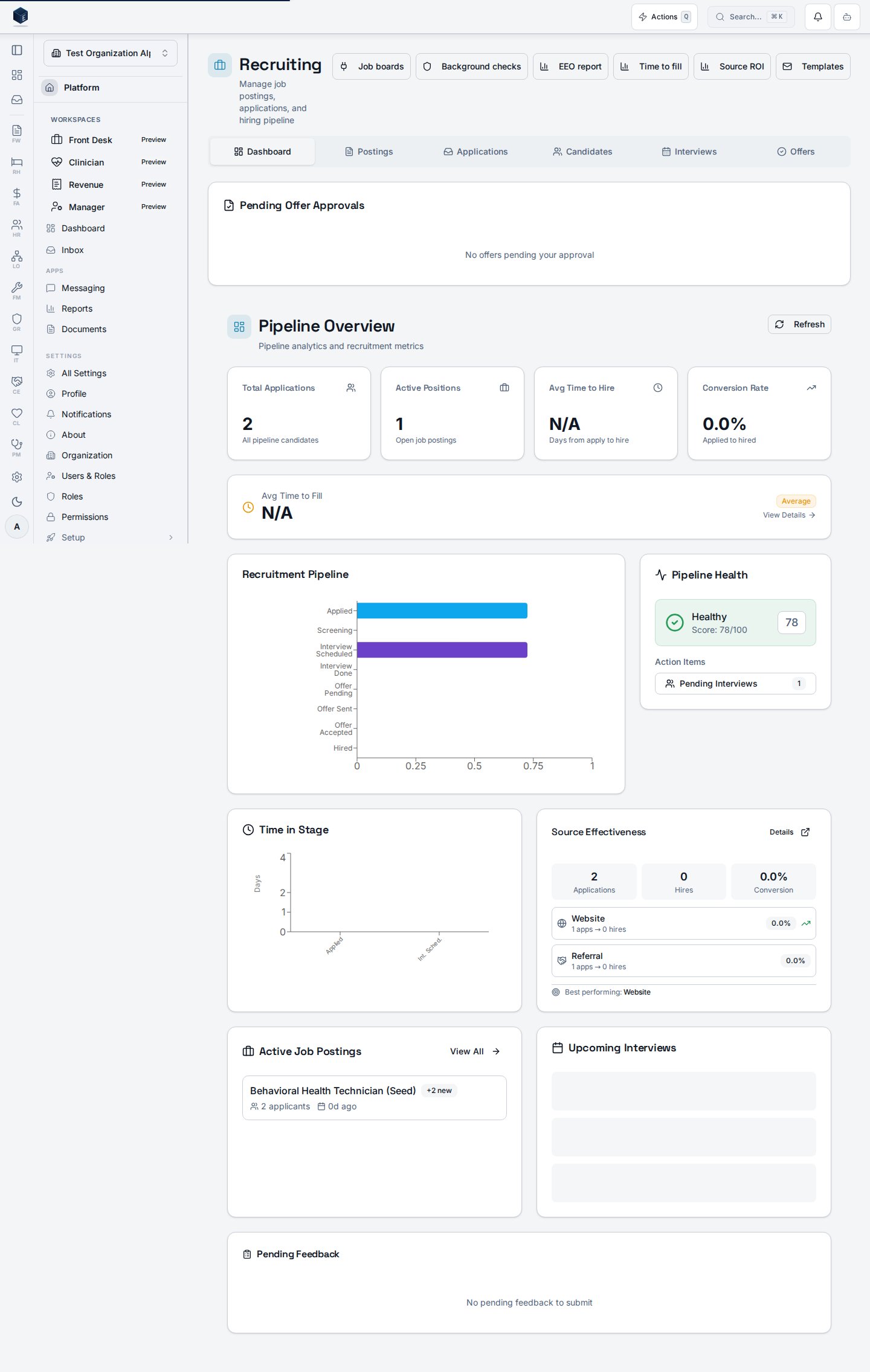
Job postings
Create a posting linked to an open position, then Publish it. Only published postings are reachable from the public careers page.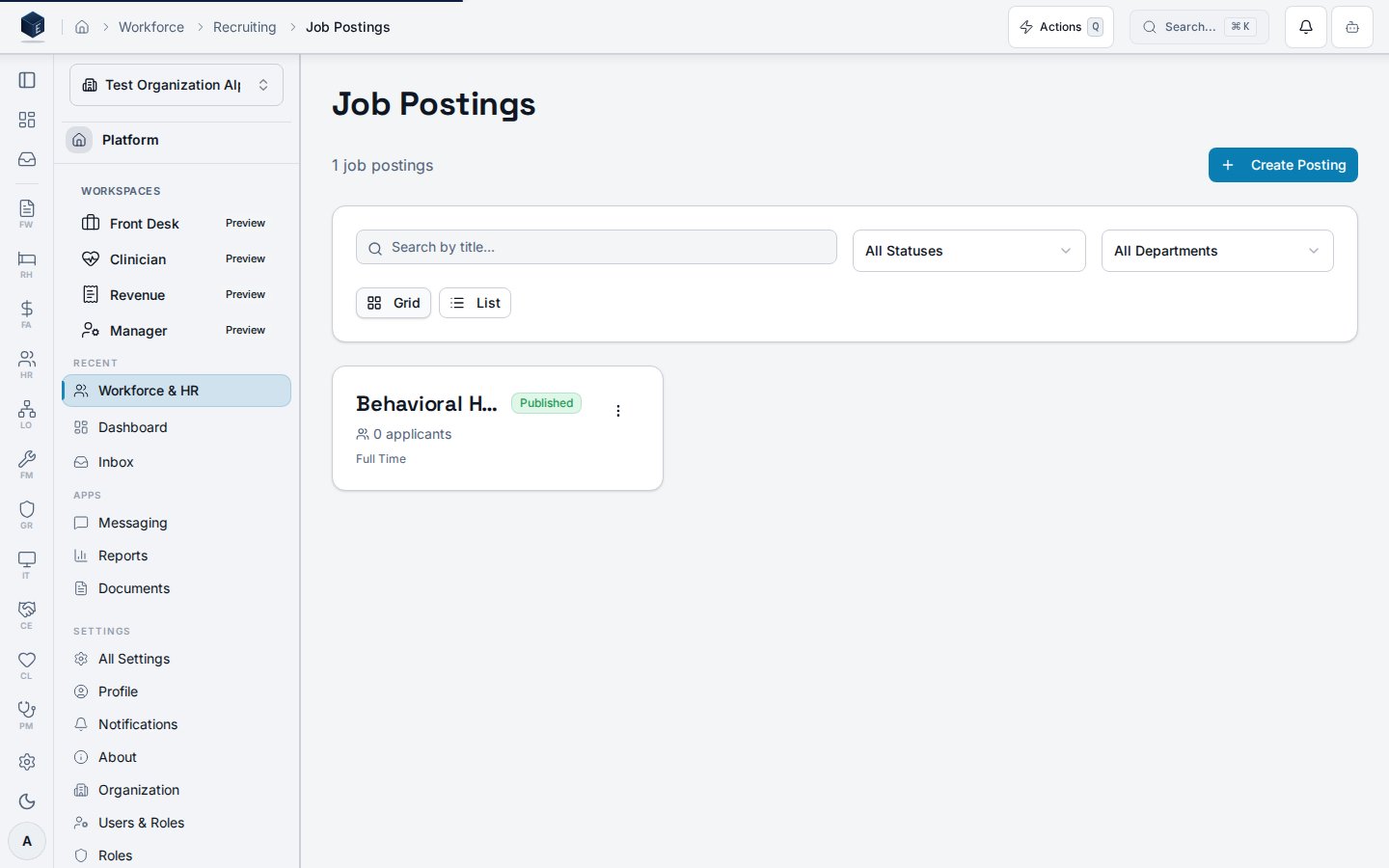
Publishing a posting transitions it from
draft to published and stamps published_at — the start of the time-to-fill clock used by analytics.The public careers page
Each published posting has a public, unauthenticated careers URL at/careers/:postingId. Candidates view the role and apply without an account; the application is created server-side and the candidate sees an on-screen confirmation.
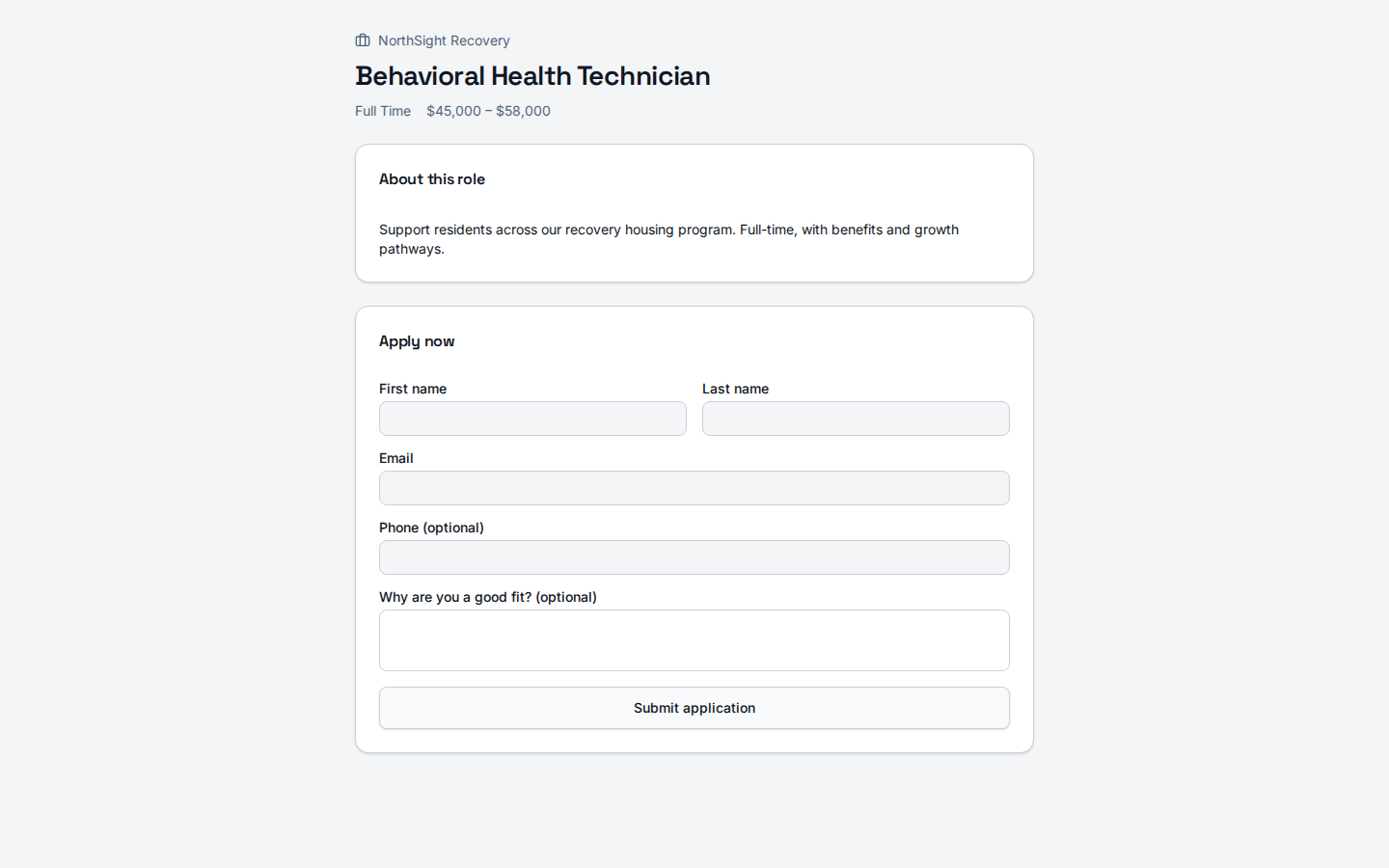
Public applications are accepted through a service-role edge function with per-IP rate limiting; a candidate record is found-or-created by email and a duplicate application to the same posting is collapsed into the existing one.
The application pipeline
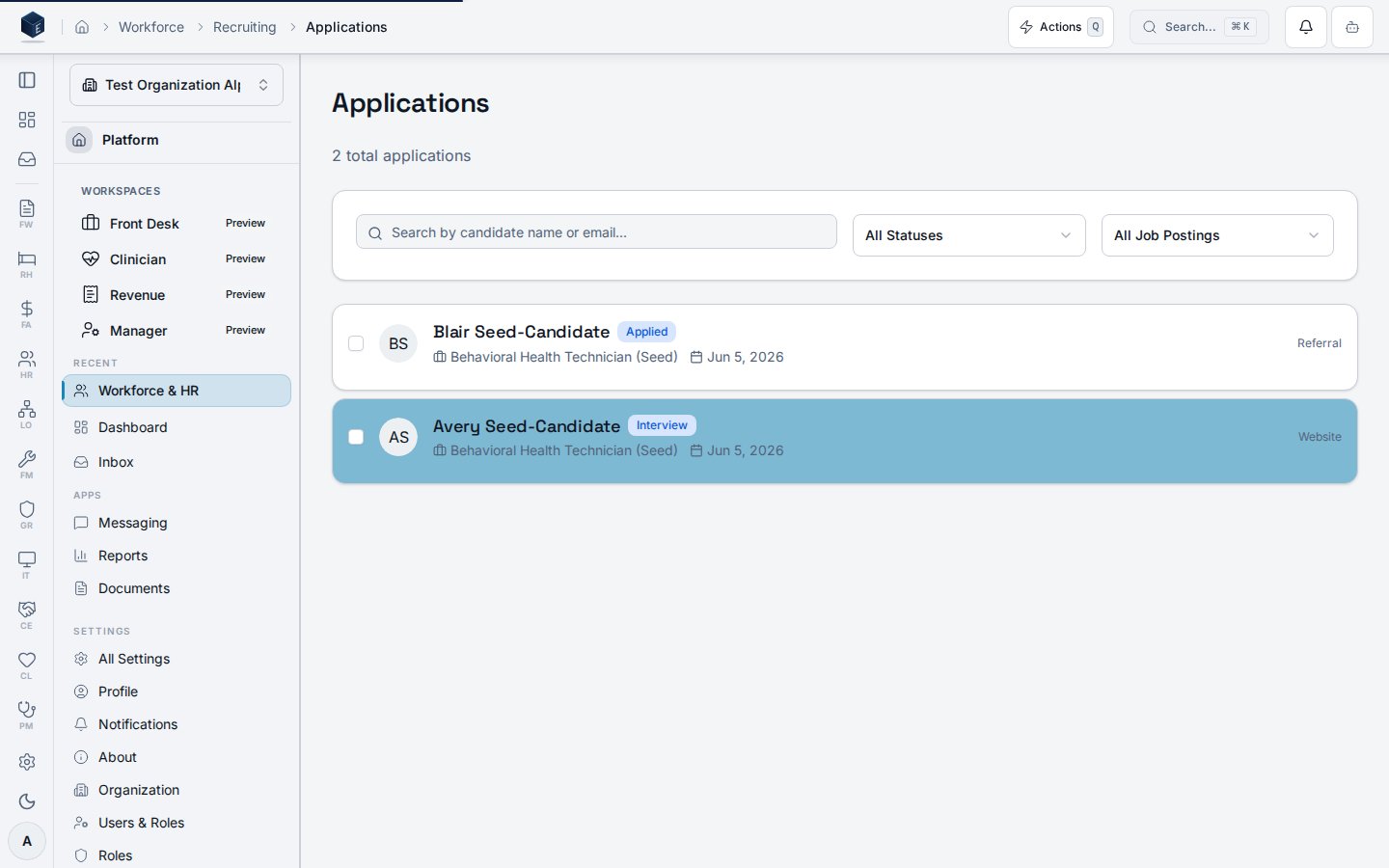
Applications progress through stages —applied → screening → interview → offer → hired (or rejected/withdrawn). Recruiters screen, advance, and manage candidates from the pipeline.
Interviews & scorecards
Schedule interviews from an application and capture structured feedback — per-competency ratings (overall, technical, communication, cultural fit, problem solving) plus an overall recommendation (strong_yes … strong_no). Feedback is attributed to the interviewing employee and aggregated for the hiring manager.
Offers — sending and accepting
Offers move throughdraft → pending approval → approved → sent → accepted. From a sent offer, the Accept Offer action records the candidate’s acceptance and performs the hire.
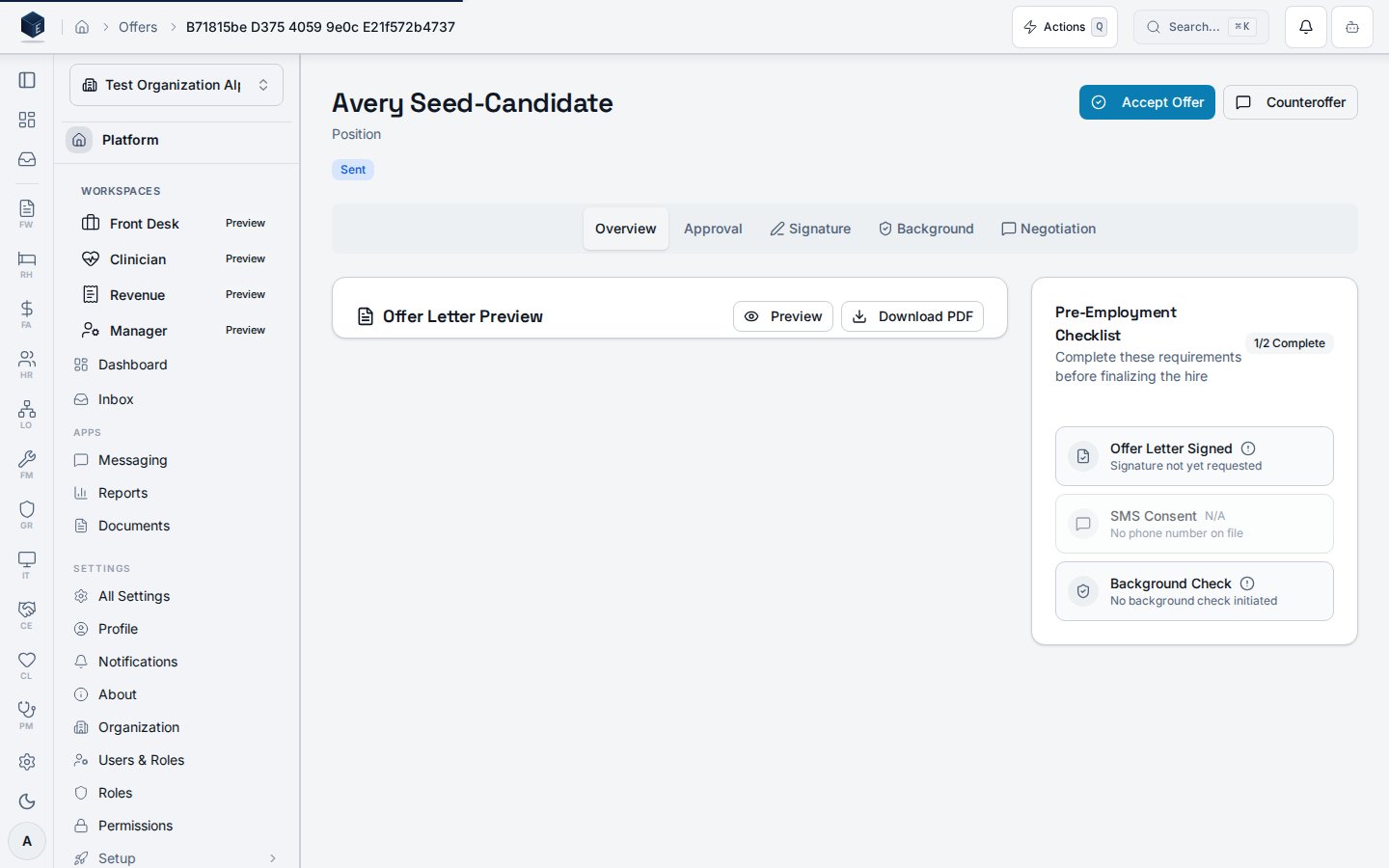
Accepting an offer is idempotent: it creates exactly one employee record (with its platform identity) and one hire transition, marks the application
hired, and emits the hr_employee_hired event that drives HR-03 onboarding, IT-08 provisioning, and PF-10 notifications. Re-accepting the same offer is a safe no-op.Candidate self-service from the portal
Candidates can review, accept, or decline their own offers from the candidate portal — the self-service counterpart to the recruiter Accept Offer action. After a recruiter sends an offer, the candidate sees a My Offers link on their portal dashboard at/hr/candidate-portal/offers, opens an individual offer at /hr/candidate-portal/offers/:offerId, and confirms an Accept or Decline in a dialog.
The portal only surfaces offers in sent, accepted, rejected, expired, or withdrawn status — internal drafts and pending-approval offers are never exposed. Accepting from the portal runs the same idempotent hire pipeline as the admin action and emits hr_employee_hired. Declining transitions the offer to rejected, stamps responded_at, and mirrors the decline onto the linked application.
The portal uses a candidate-scoped JWT (not Supabase Auth), and every request is enforced against the offer’s owning
candidate_id + organization_id. A candidate cannot view or act on another candidate’s offer.Analytics
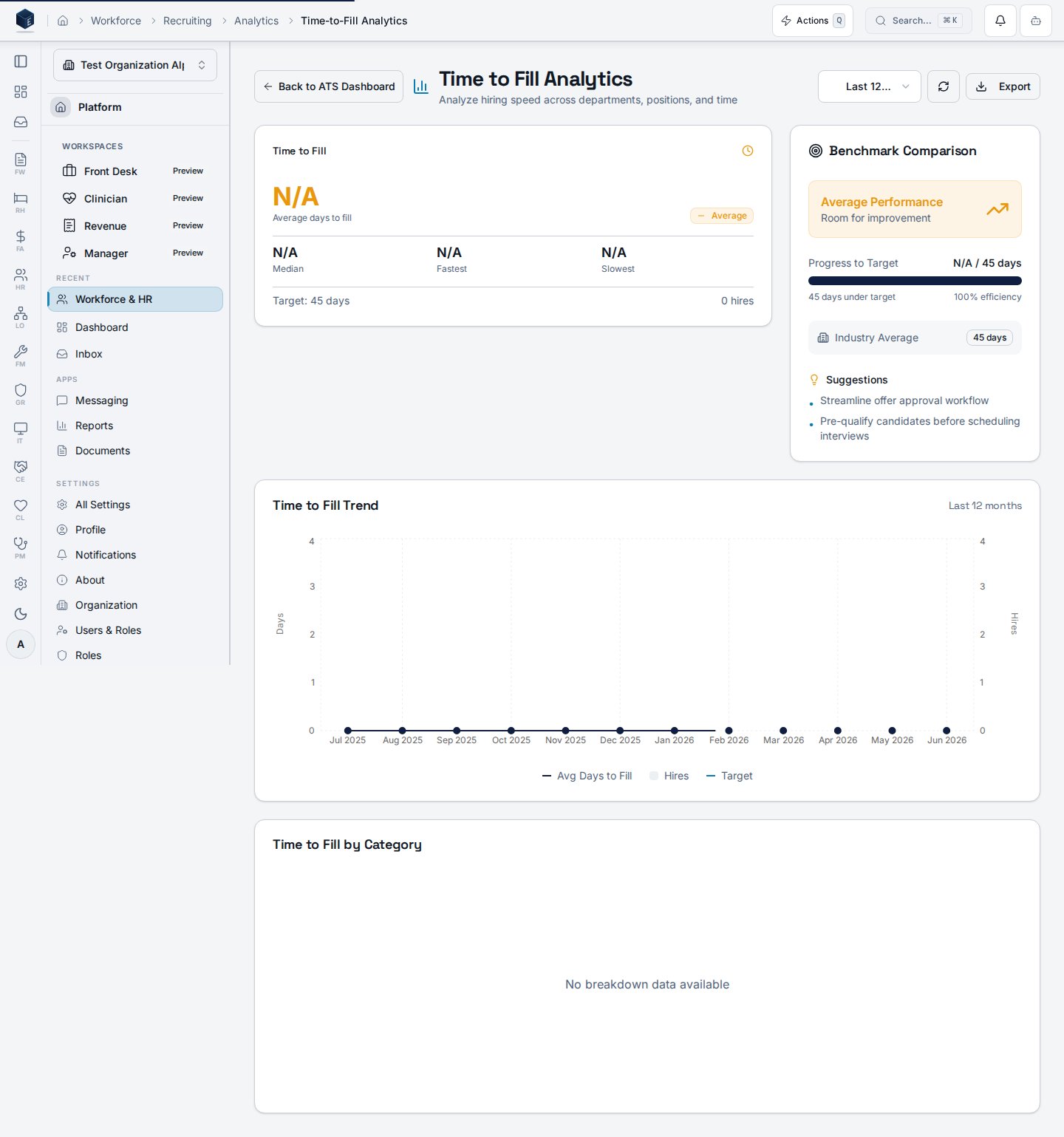
Time to fill
Measures the days from a posting’spublished_at to a hire’s hired_at, with breakdowns and a target benchmark.
EEO reporting
Aggregates applicant-pool and hired-candidate demographics with adverse-impact analysis and data-completeness. EEO data is stored in a restricted table readable only by compliance/admin roles.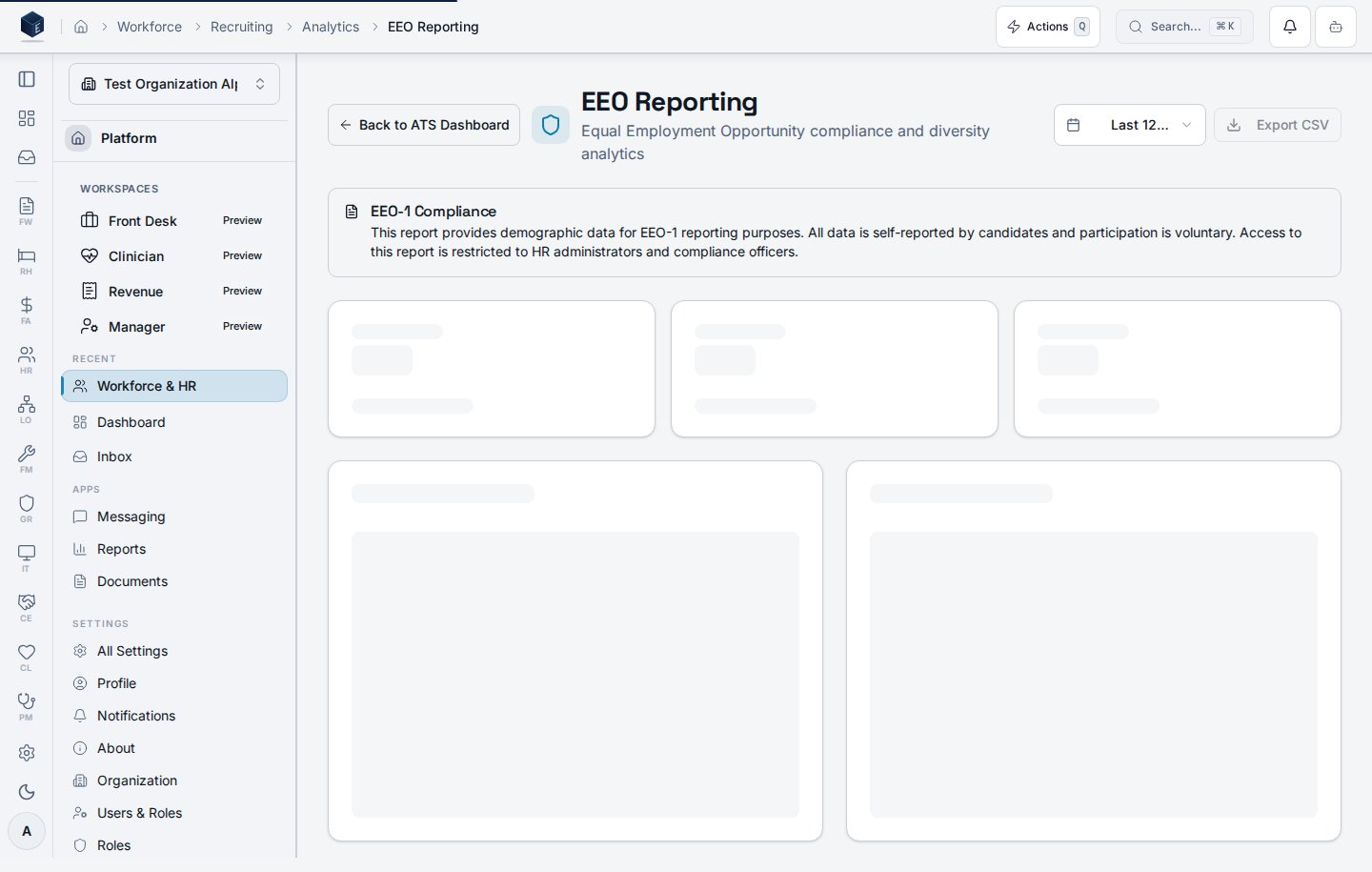
Permissions
Related
- Source spec:
specs/hr/specs/HR-09-applicant-tracking-system.md - Proliant payroll integration